Making Secondhand Feel Native to H&M
H&M needed secondhand to feel as easy to buy as anything else on hm.com.
I led the design of a Pre-Loved experience that integrated partner inventory into H&M's existing journey — discovery, product detail, cart, checkout, delivery, and returns — while aligning 10 product teams around a focused launch scope.



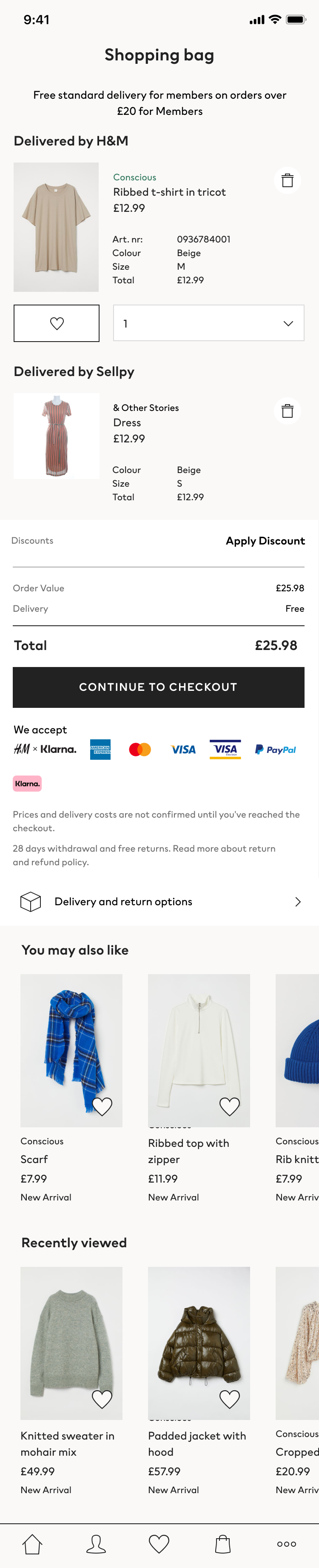

H&M wanted circular commerce inside the core shopping journey
I led the experience vision for H&M’s partner-powered resale track and coordinated design across 12 teams to ship the MVP — covering exploration, evaluation, and purchase. The backdrop: an H&M Group target of 1 million pieces traded through Circular Business Models in 2022 — spanning resale, peer-to-peer, and renting.
Make secondhand as easy to buy as anything else on H&M
Scope was deliberately narrow — one partner, one market, basic listing, shared cart and checkout. The design job was to make a partner-powered model feel native to H&M without pretending it was identical.
We ran a sprint to explore what Pre-Loved could feel like inside H&M
I ran a sprint with a delivery team designer to explore what a native secondhand experience could look like — a homepage block into a Pre-Loved listing, a condition-aware PDP, and shared cart and checkout.

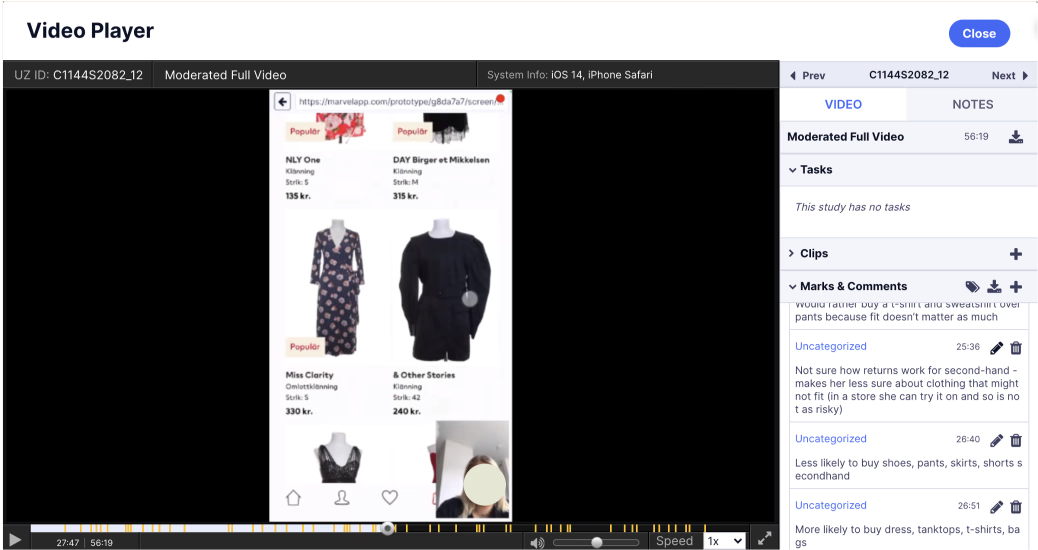
Eight customers tried it. Three things needed to change.
- Finding 1No model shots, no confidenceWith no model shots, participants struggled to judge fit — and for secondhand, that uncertainty killed confidence.
- Finding 2Return info existed. Nobody found it.Return information existed on the PDP but most participants couldn't find it, even though they were actively looking for it.
- Finding 3Two parcels weren't the problem. Late discovery was.Participants who only discovered the separate Sellpy parcel at checkout reacted negatively. Those who noticed early were fine with it.
We made secondhand feel familiar where it should, and explicit where it had to
The experience had to borrow the muscle memory of regular H&M shopping without smoothing over the details customers needed for confidence.
Each finding from testing became a design decision.
Make the entry point feel like H&M
The Pre-Loved landing page was the first thing shoppers saw after clicking in. It had to borrow H&M's visual language — familiar enough that they hadn't left the site, distinct enough that secondhand was legible.
We made secondhand feel familiar where it should, and explicit where it had to
The experience had to borrow the muscle memory of regular H&M shopping without smoothing over the details customers needed for confidence.
Each finding from testing became a design decision.
Make the entry point feel like H&M
The Pre-Loved landing page was the first thing shoppers saw after clicking in. It had to borrow H&M's visual language — familiar enough that they hadn't left the site, distinct enough that secondhand was legible.
Funnel visitors into a familiar shopping path
A homepage content block led to Pre-Loved navigation and then into a product listing page. Discovery felt like H&M, while the assortment was still clearly secondhand.
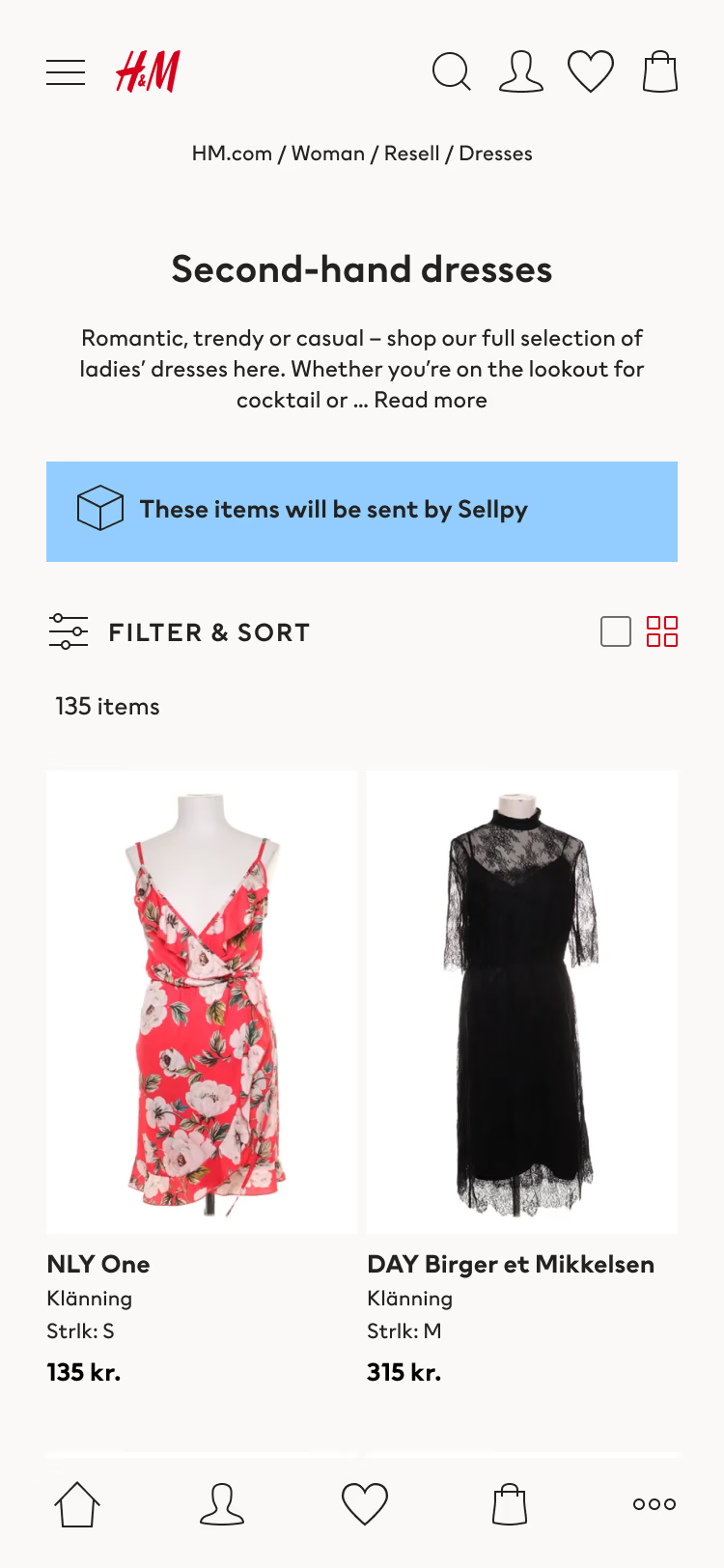
Give enough information to make a confident decision
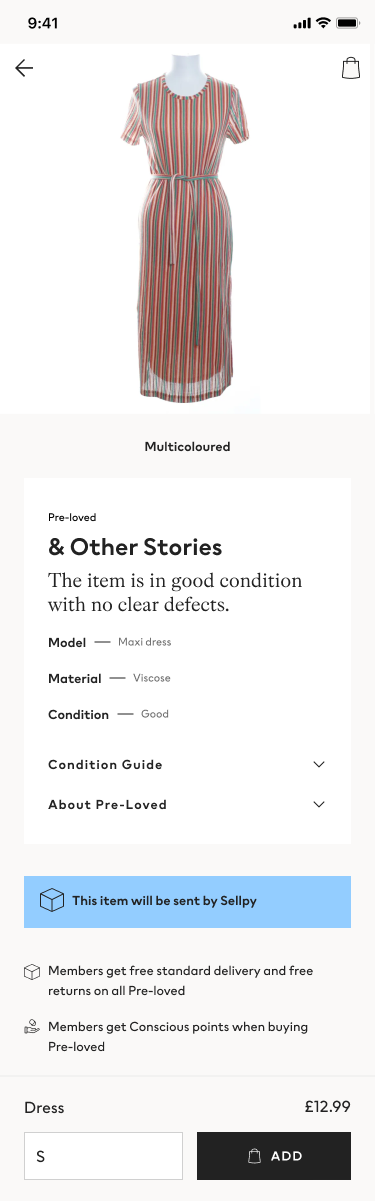
The product detail page made condition, delivery, returns, and sustainability impact visible where customers were deciding whether a one-off item felt worth buying.
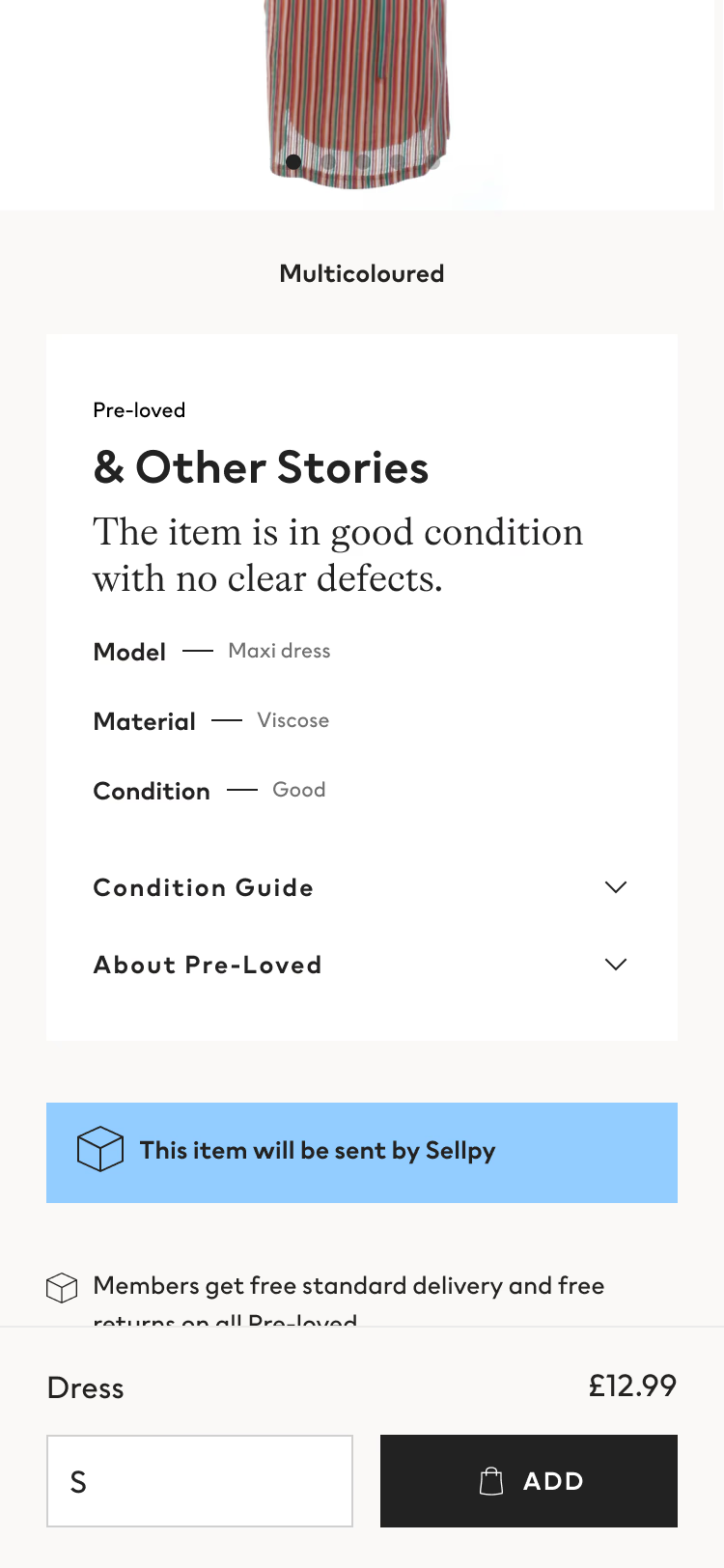
Make partner fulfilment visible before it became a surprise
Pre-Loved items could share bag and checkout with regular products, but Sellpy delivery and return expectations needed to show up early enough to protect trust.
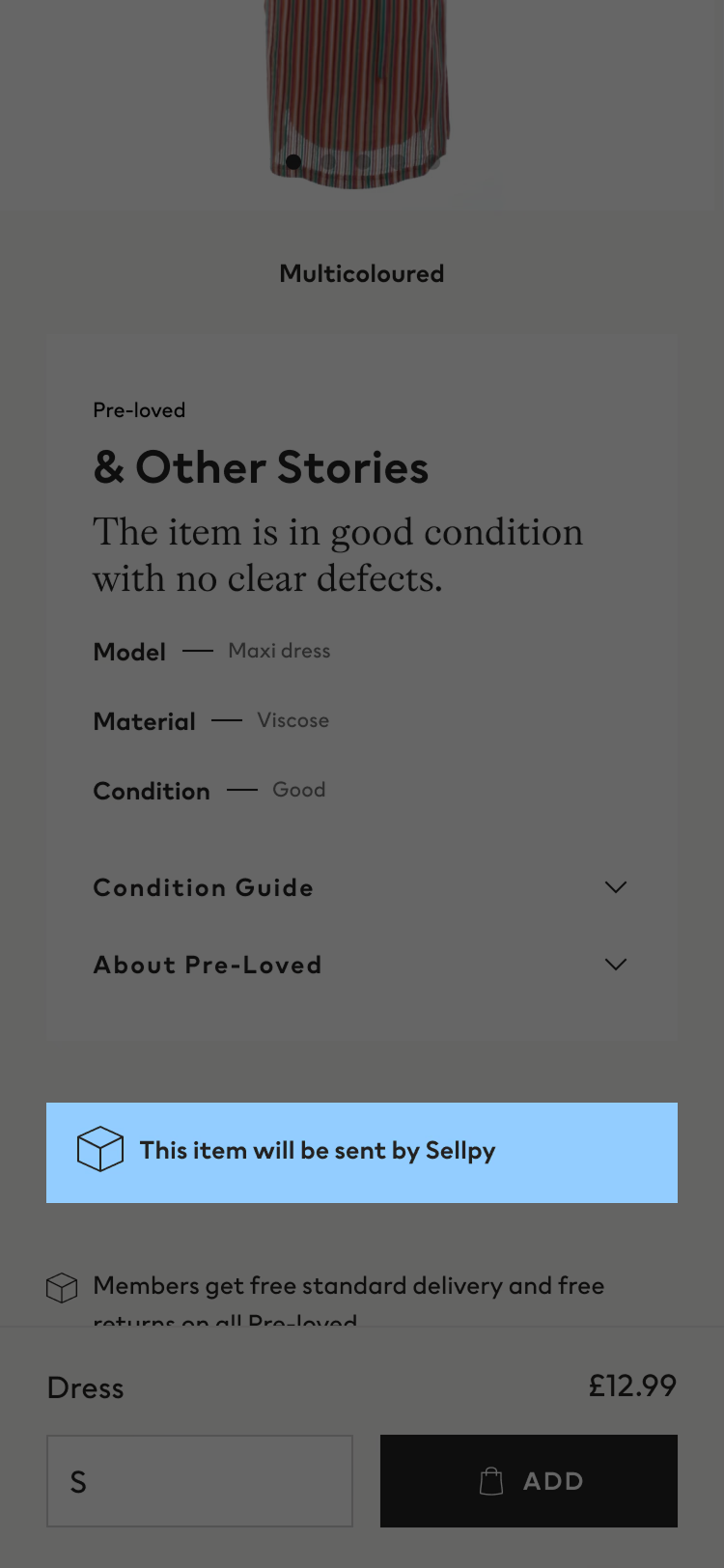
Secondhand worked inside the H&M shopping journey.